
10 Most Dangerous Prisoners Held Inside Holman Correctional Facility
Built to hold 13,318 inmates, today Holman Correctional Facility holds over 24,000 and has only a skeleton staff, many of which come under daily attacks from inmates.

10 - Toforest Johnson
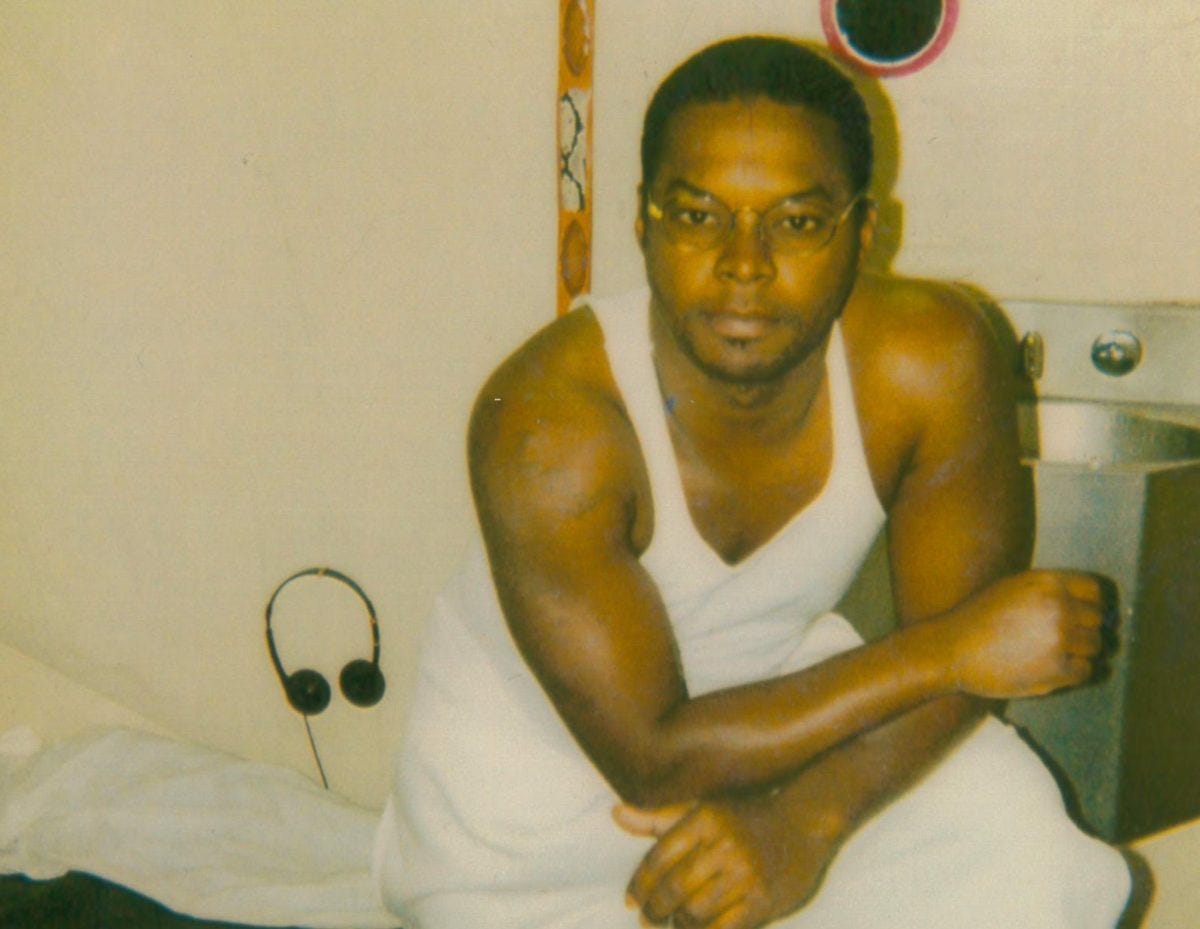
Toforest Johnson was convicted of capital murder for the 1995 killing of Jefferson County Deputy Sheriff William G. Hardy in Alabama. The deputy was shot in the head while working as a security guard at a hotel.
Johnson was convicted based on the testimony of a single witness, Violet Ellison, who claimed to have overheard him confessing to the murder during a jailhouse phone call.
There was no physical evidence or eyewitness testimony that connected him to the crime scene. Additionally, over a dozen alibi witnesses testified that Johnson was at a nightclub across town at the time of the murder.
A jury voted 10-2 to recommend a death sentence, which the trial court imposed. Johnson is currently on death row at the Holman Correctional Facility in Alabama.
The prosecution’s case has faced significant scrutiny. It was later revealed that Ellison was paid $5,000 for her testimony, which was not disclosed to Johnson’s lawyers at the time of the trial.
The prosecution’s theory of the crime also changed five times throughout five different court proceedings and Johnson’s case is often cited as one of the biggest possible miscarriages of justice in U.S History.
Former prosecutors, U.S Senator Doug Jones, The Innocence Project and criminal justice reform advocates have filed a new round of briefs urging a court to give Alabama death row inmate Toforest Johnson a new trial.
Drop a comment down below and let me know your thought on this case, its not very often a conviction of this sort comes across my desk, but this one had me take a great deal of notice.
9 - Tony Barksdale
Tony Barksdale was convicted of two counts of capital murder for the shooting death of 19-year-old Julie Rhodes in Alexander City, Alabama, in 1995.
Barksdale, along with two other men, stole a car and were trying to get back to Guntersville, Alabama. After failing to get a ride, Barksdale said he would “jack” somebody.
He was the only one in the group armed with a gun. They flagged down Julie Rhodes, got into her car, and Barksdale directed her to a dead-end street. Barksdale then shot her twice, once in the face and once in the back, before pushing her out of the car.
For his crimes, Barksdale was sentenced to death. He is currently incarcerated at Holman Correctional Facility in Alabama, where he is on death row. Since his conviction, Barksdale has filed multiple appeals, including a federal habeas corpus action and a request for a Certificate of Appealability.
He has raised issues such as ineffective assistance of counsel and due process concerns regarding the findings of fact and conclusions of law in his state habeas proceedings. At the time of his sentencing, it was also noted that he had a prior conviction for armed robbery in Virginia.
8 - James Edward Barber
James Edward Barber was convicted of capital murder for the 2001 killing of 75-year-old Dorothy Epps in Harvest, Alabama. The murder was considered capital because it was committed during a robbery.
Barber, a handyman who had a social relationship with Epps’s daughter, confessed to killing Epps with a claw hammer and fleeing with her purse.
A jury voted 11-1 to recommend a death sentence, which the trial court imposed. Barber was executed by lethal injection at the William C. Holman Correctional Facility in Alabama on July 21, 2023. At the time of his execution, he was 64 years old.
Leading up to his execution, Barber’s attorneys filed a motion to stay, arguing that a lethal injection would violate his Eighth Amendment rights against cruel and unusual punishment. The U.S. Supreme Court denied the application for a stay of execution.
7 - Bobby Baker Jr.
Bobby Baker Jr. was convicted in Alabama of capital murder for the killing of his wife, Tracy Baker, during a first-degree kidnapping. He was also convicted of first-degree assault for shooting another individual, and for discharging a firearm into an occupied dwelling.
The events leading to the convictions occurred on April 5, 1994. After a physical altercation with another man, Bobby Baker Jr. went to a residence where his wife, Tracy, was located.
He carried an AK-47 assault rifle and, after being refused entry, he fired shots into the house. He then forced his way inside, found his wife, and forced her into a vehicle.
During this time, Tracy Baker was screaming that he was going to kill her. As he forced her into the car, he shot another person twice, hitting them in the legs. He then drove off with Tracy in the vehicle.
The autopsy report showed that Tracy Baker was shot five times with bullets from the AK-47 assault rifle. A jury recommended a death sentence by a 10-2 vote for the capital murder conviction. The court followed this recommendation and sentenced him to death.
He also received consecutive sentences of life imprisonment for the first-degree assault conviction and life imprisonment for the conviction of discharging a firearm into a dwelling.
6 - Thomas Dale Ferguson

Thomas Dale Ferguson was convicted of capital murder for the 1997 shooting deaths of Harold Pugh, age 41, and his 11-year-old son, Joey Pugh, in Alabama. The murders occurred during a robbery, as Ferguson and four co-defendants planned to steal a truck for a bank robbery.
On July 20, 1997, Ferguson and his accomplices—Mark Moore, Michael Craig Maxwell, Donald Risley, and Kino Graham—were looking for a vehicle to use in a bank robbery in Belmont, Mississippi.
They encountered Harold and Joey Pugh at a boat landing. According to Ferguson’s statement to police, Maxwell held the Pughs at gunpoint and forced them into their boat.
The group then traveled downstream. Ferguson claimed that he did not have a weapon, and that Maxwell shot Harold and then he and Moore threw the bodies into the creek. Another co-defendant, Donald Risley, later testified that Ferguson was also armed with a gun.
A jury found Ferguson guilty on four counts of capital murder, including murder committed during a robbery and murder of a person less than 14 years old.
The jury recommended a sentence of life imprisonment without parole by a vote of 11-1. However, the trial court judge overrode the jury’s recommendation and sentenced Ferguson to death by electrocution.
This practice of judicial override has since been abolished in Alabama, but the law was not retroactive and Ferguson’s sentence stands.
5 - Shonelle Jackson
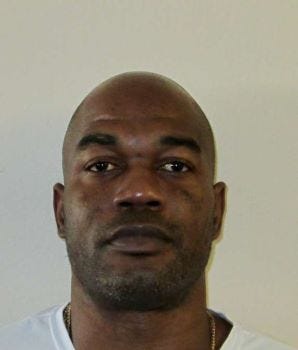
On April 25, 1997, Jackson and three co-defendants were in a stolen car looking for a vehicle to rob for its stereo system. They found Lefrick Moore, who was driving a Chevrolet Caprice with a “good stereo system,” and decided to rob him.
Jackson, who was armed with a .380-caliber pistol, pulled his stolen car in front of Moore’s, causing a collision. He then got out and shot Moore, who later died from the wound.
A jury convicted Jackson of capital murder and first-degree theft. The jury unanimously recommended a sentence of life imprisonment without the possibility of parole for the capital murder conviction. However, the trial court judge, William Gordon, overrode the jury’s recommendation and sentenced Jackson to death by electrocution.
At the time, judicial override was permitted under Alabama law. The judge noted that while Jackson’s age was a mitigating factor, it was outweighed by his extensive juvenile record.
Jackson is currently on death row at the Holman Correctional Facility in Alabama. His case has gone through multiple appeals. One significant issue raised was the admissibility of his statements to the police, which he claimed were coerced.
An appeals court remanded the case for a hearing to determine if his statements were voluntary. Additionally, a juror later expressed uncertainty about whether Jackson was the person who fired the fatal shot. Despite these challenges, his convictions and death sentence have been affirmed on appeal.
4 - Courtney Lockhart
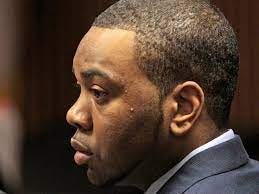
Courtney Lockhart was convicted of capital murder for the 2008 kidnapping, robbery, and murder of 18-year-old Auburn University student Lauren Burk in Auburn, Alabama. The crime was part of a violent crime spree that involved a string of armed robberies and carjackings in Alabama and Georgia.
On March 4, 2008, Lockhart kidnapped Burk at gunpoint, forcing her into her car. He drove her around for about 30 minutes, during which he complained about his life and unemployment.
He also ordered Burk to undress, a charge of attempted rape for which he was later acquitted. When Burk tried to escape by jumping from the moving car, Lockhart shot her in the back.
She was found on the side of a road and later died at a hospital. Lockhart then fled, taking Burk’s credit card, iPod, and $46. He confessed to the murder and other crimes after his arrest on March 7.
A jury convicted Lockhart of capital murder and unanimously recommended a sentence of life imprisonment without the possibility of parole. However, the trial court judge overrode the jury’s recommendation and sentenced Lockhart to death, citing his criminal history.
Lockhart is currently on death row at the Holman Correctional Facility in Alabama. His case has been the subject of multiple appeals, challenging the admissibility of his confession and the effectiveness of his legal counsel.
He has also appealed the judicial override of the jury’s sentencing recommendation.
3 - Devin Moore
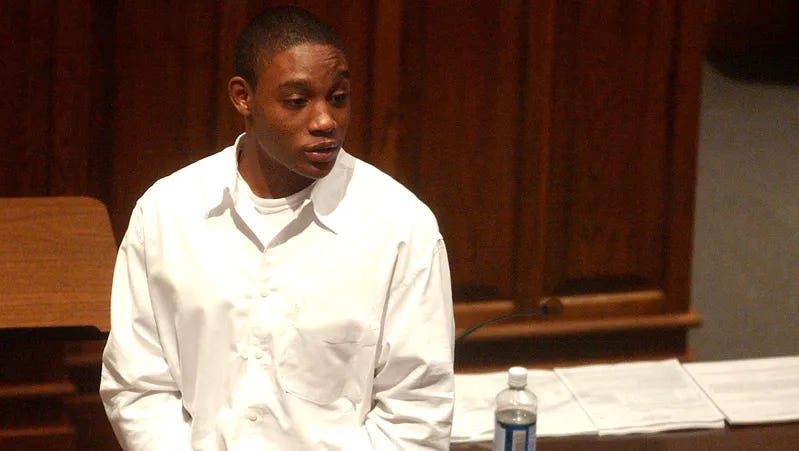
Devin Moore, whose birth name is Devin Darnell Thompson, was convicted of three counts of capital murder for the deaths of three law enforcement officers in Fayette, Alabama, on June 7, 2003.
Moore was arrested on suspicion of driving a stolen vehicle and taken to the police station. While he was being booked, he was able to grab an officer’s gun.
He then shot and killed Fayette police officers Arnold Strickland and James Crump, as well as police dispatcher Leslie “Ace” Mealer. He then escaped in a stolen police car.
Following his capture, Moore confessed to the killings, stating that he “didn’t want to go to jail.” During his trial, his defense team argued that his actions were influenced by his frequent playing of the video game “Grand Theft Auto” and that he suffered from post-traumatic stress disorder.
He was convicted and sentenced to death by lethal injection. As of July 2013, he was on death row at Holman Correctional Facility in Alabama, appealing his sentence.
2 - John Joseph DeBlase

John Joseph DeBlase was convicted of three counts of capital murder in connection with the 2010 deaths of his two young children, four-year-old Natalie Alexis DeBlase and three-year-old Jonathan Chase DeBlase.
The murders were made capital because both victims were under the age of 14, and because two or more people were murdered as part of one course of conduct.
In the months leading up to their deaths, both children were subjected to abuse. According to reports, Natalie was gagged and locked in a suitcase for an extended period and poisoned with antifreeze.
Chase was forced to stand in a corner overnight. DeBlase and his common-law wife, Heather Leavell-Keaton, blamed each other for the killings. After the children died, DeBlase buried their bodies in wooded areas in Alabama and Mississippi.
A jury convicted DeBlase of three counts of capital murder. By a vote of 10-2, the jury recommended a death sentence, which the trial court followed, sentencing him to death by lethal injection in January 2015.
His death sentence was affirmed on appeal, and he is currently incarcerated on death row at the Holman Correctional Facility in Alabama. Leavell-Keaton was also convicted and sentenced to death for her role in the crimes.
1 - Rex Allen Beckworth
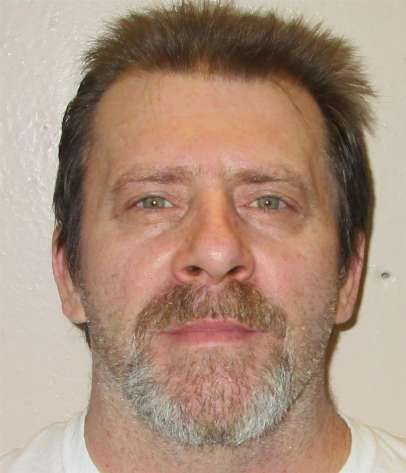
Rex Allen Beckworth was convicted of capital murder for the death of Bessie Lee Thweatt, an 87-year-old widow. The crime took place in her home in rural Houston County, Alabama, in January 2000.
After the crime, Beckworth was arrested in Phoenix, Arizona. While being transferred back to Alabama, he gave a tape-recorded confession admitting his involvement. His confession aligned with the physical evidence found at the crime scene.
In September 2002, a jury convicted Beckworth of capital murder. The jury recommended a death sentence by a 10-to-2 vote, which was affirmed by the trial court. He was placed on death row at Holman Prison on November 6, 2002.
Beckworth has filed multiple appeals and petitions for post-conviction relief, including claims of ineffective assistance of counsel and a claim under Brady v. Maryland alleging that the prosecution failed to disclose exculpatory evidence.
He also raised an Atkins claim, arguing that he is intellectually disabled and therefore should not be subject to the death penalty.
Thanks for reading, don’t forget to check out our YouTube Channel where we publish all our articles as videos on true crime and billionaire lifestyles.